Reaching the 2030 climate goal is extremely unlikely; additional and structural policy is needed
It is extremely unlikely that the Netherlands will reach the climate goal of a 55% reduction in emissions by 2030. With current implemented policy, per January 1st (‘basis pathway)’*, the country is on track towards 45-53% fewer greenhouse gas emissions in 2030 compared to 1990. Other calculable plans (‘additional policy’) will only add 2 percentage points to this figure, making it a 47 to just below 55% reduction. As such, this climate goal lies outside of the bandwidth; in other words, the chance of reaching it is less than 5%. Equally, the Netherlands is not on track in reaching the legally binding European goals for renewable energy and energy use. More policy effort for energy saving can help reach these goals, concludes the Climate and Energy Outlook (KEV) 2025.
Secure, structural policy is becoming increasingly urgent
Originally, the Dutch Climate Act prescribed the 2030 goal as a distant objective to work towards. However, when thinking in policy terms, that year is rapidly coming closer, to the point that planning and looking ahead is hardly possible anymore. For long-term investment agendas, many decisions leading towards 2030 have already been taken. The number of potential policy pathways that would lead to a 55% emissions reduction in 2030 (at least, without serious economic damages or societal resistance) is growing smaller and smaller. Additionally, there is hardly any emissions reductions in the pipeline for after 2030. It is therefore extremely important to take more stringent measures which would support a structural transition towards a climate-neutral Netherlands in the long run.
Delay now makes future challenges greater and more expensive
It is important to realise that the goal of a 55% reduction in emissions by 2030 is in line with the trajectory towards climate neutrality in 2050. If the former is not met, the latter will only become a greater challenge. To reach the 2030 with 50% and 95% certainty, respectively, emissions need to be limited by 13-22 megatonne CO2-equivalents. Calculable plans that were not finalised by May 1st (‘additional policy’, May 1st being the cut-off date for KEV research) could add another 4 megatonnes to this number.
Rollout of large-scale sustainability is stagnant
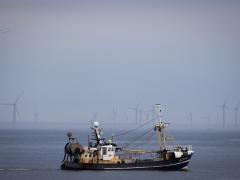
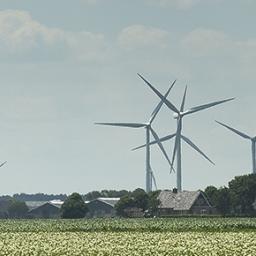
Offshore wind power is crucial to the Dutch energy transition. Currently, there is almost 5 gigawatt (GW) in offshore wind farms located in the North Sea while the KEV 2024 assumed a capacity of 12 GW for 2030. This year, planned capacity reduced to 10 GW, which means that renewable energy sources in current estimations of 2030 will only supply 60% of electricity, rather than the anticipated 70% in the KEV 2024 and 85% in the KEV 2022. Since writing up the KEV 2025, the wind farm Zeevonk’s licence was adjusted, further reducing the 2030 supply by 1 GW. This setback has not been included in this KEV estimation. For the long term, the Minister for Climate and Green Growth announced back in July 2025 that the ambition for offshore wind farms in 2040 has been lowered drastically, from 50 GW to 30-40 GW. The loss of this kind of capacity has a big impact on the intended trajectory of the Dutch energy transition.
Sustainability needs both certainty and stability
As the outlook for the transition becomes more problematic, a subsidy scheme that provided certainty to the market seems be cut. Budgetary changes** by Cabinet-Schoof mean that the SDE++ subsidiary scheme for sustainable techniques might be terminated, and is not expected to be accessible after 2027. Because of turnaround times, the consequences of this decision will mostly be felt after 2030. These will, however, be significant, since the SDE++ is a central instrument for the sustainability of energy and industry in the Netherlands. Additionally, tailor-made agreements are only slowly taking shape, while political changes concerning the carbon tax are leading to an uncertain investment climate for industry.
Increased energy independence due to sustainability measures
Because of the delay in offshore wind farms, renewable energy sources will contribute a percentage point less to the energy supply in 2030 than calculated in the previous KEV (2024): 29-36%. The intended goal of 39% is not met, although, the figure is still significantly higher than the current 20%. As such, renewable energy is significantly contributing to Dutch energy independence, a concept which this KEV maps out for the first time. The dependence on energy import is now at an all-time high; nearly 80% of Dutch energy use is imported from abroad. This figure will lower to just under 70% in 2030, due to the rollout of renewable sources; this level correlates with the one before the Netherlands phased out natural gas extraction in the province of Groningen. Simultaneously, stagnation in growth of sustainable energy after 2030 is also halting this reduction in energy dependence.
Energy reduction requires specific policy
Policy has more often been aimed at emission reductions than energy saving. It would be useful to aim additional policy directly at energy saving; this will not only contribute to reducing emissions and import dependencies, but also to a lower energy bill for households and businesses. Over the past few years, energy use by end users was a decreasing trend. In 2024, however, it slightly rose again. It is expected that it will remain at this same level towards 2030. Indeed, the savings gained with electrification in housing and mobility will be cancelled out by a higher electricity demand by data centres and kerosene for aviation. As such, in the basis trajectory, it is very unlikely (circa 10%) that the European goal for reduction in final energy use is met.
Reaching the European emission target ESR
The Netherlands is on track to reach the European emission target in the Effort Sharing Regulation (ESR) for the sectors built environment, mobility, and agriculture. This targets48% reduction in emissions in 2030 compared to 2005. This cumulative target provides an emission budget to the Netherlands of 829 megatonnes in the period 2021-2030. In our estimation, the Netherlands stays well below this figure, with 781-816 megatonnes. Here, rapid and temporary emission reductions due to COVID-19 measures and high natural gas prices play a significant role. From 2027 onwards, according to our estimation, the emissions in ESR sectors will be slightly higher than the intended trajectory once more.
The KEV as a monitoring and accountability instruments
The annual Climate and Energy Outlook (KEV) is, on the basis of the Climate Act, an important accountability instrument of Dutch climate and energy policy. Additionally, the KEV also monitors progress and makes its result accessible in a report by shedding light on the effects of certain adopted and proposed policy measures. The KEV is written by PBL in close cooperation with the Netherlands Organisation for Applied Scientific Research (TNO), Statistics Netherlands (CBS), and the National Institute for Public Health and the Environment (RIVM), alongside contributions by the Netherlands Enterprise Agency (RVO) and Wageningen University & Research (WUR).
* In the baseline scenario, emissions in 2030 decrease by one percentage point compared to last year. This decline cannot be attributed to new policy, but is caused by a change in the method for calculating emissions from land use and reduced assumed production in industry due to factors such as higher prices and geopolitical changes.
** A structural amount of 1 billion Euros is annually cut from a reserve fund (‘the price risk buffer’) for setbacks within the SDE++ scheme.
Related

Reaching 2030 climate goal becomes extremely unlikely; extra policy with rapid effect is needed